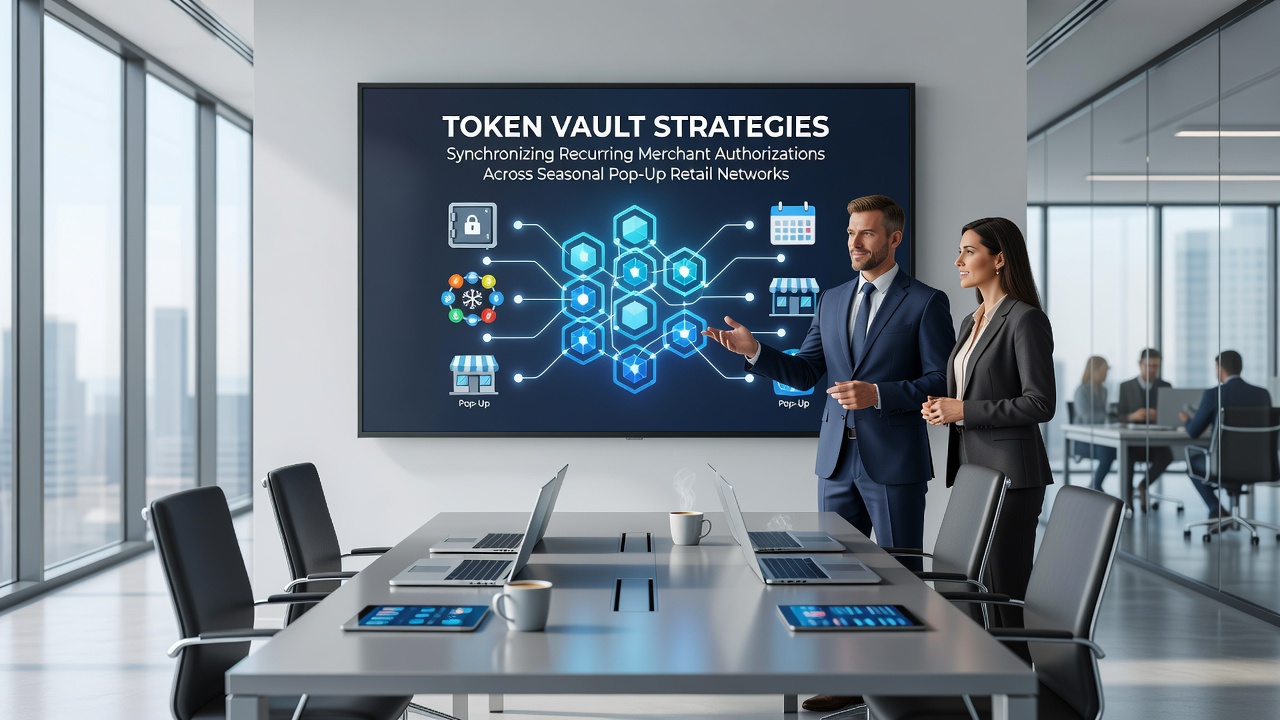
Token Vault Strategies for Synchronizing Recurring Merchant Authorizations Across Seasonal Pop-Up Retail Networks
Token vaults serve as secure repositories that replace sensitive payment card details with unique tokens, allowing merchants to process recurring authorizations without retaining actual account numbers in their systems, and this approach has gained traction among operators managing temporary retail setups that appear during peak seasons such as holiday markets or festival circuits. Researchers at payment security organizations note that these vaults enable consistent billing cycles even when locations shift from one site to another within a single network, while data from industry reports indicates growing use in environments where point-of-sale terminals must align with online authorization streams across short-term operations.
Core Components of Token Vault Systems
Token generation begins at the point of initial card capture, after which the vault stores the mapped token and returns it for future transactions, so recurring charges can proceed through encrypted channels without exposing primary account data. Observers note that this separation reduces the scope of compliance audits because the vault handles storage separately from transaction processing endpoints, and studies from academic institutions have documented lower breach risks in networks that adopt vaulting protocols compared to those relying on direct card storage. In seasonal pop-up scenarios, where vendors rotate through multiple venues, the vault acts as a central synchronization point that updates authorization records in real time as inventory systems feed data into billing engines.
Addressing Synchronization Across Distributed Locations
Pop-up retail clusters often operate with intermittent connectivity, which creates challenges when authorization requests must remain consistent across sites that open and close on varying schedules. Token vaults address this by maintaining a unified ledger that pushes updates to local terminals via secure APIs, allowing a merchant at one temporary stall to reference the same token profile used at another location earlier in the season. According to analyses from regulatory bodies in Canada, such synchronization minimizes duplicate charges and failed authorizations that arise when customer data falls out of alignment during rapid site transitions. Those who manage multi-vendor events report that vaults equipped with automated reconciliation features detect discrepancies within minutes rather than days, supporting smoother operations during high-volume periods like summer fairs or winter holiday villages.

Implementation Approaches for Seasonal Networks
One effective strategy involves tiered vault access where primary tokens reside in a cloud-hosted core while edge caches at each pop-up site hold short-lived replicas refreshed at set intervals. This structure, examined in reports from European central banking authorities, supports offline authorization during connectivity gaps yet ensures eventual consistency once networks reconnect. Another method relies on event-driven triggers that link inventory depletion directly to authorization renewals, so a token associated with a subscription product updates automatically when stock levels change at any participating stall. Data compiled by Australian trade research groups shows that networks using these triggers experience fewer interruptions in recurring revenue streams, particularly when vendors share a common vault rather than maintaining isolated systems at each temporary site.
Security and Compliance Considerations
Encryption protocols within the vault encrypt both stored tokens and associated metadata, while access controls limit retrieval to authenticated merchant accounts tied to specific seasonal campaigns. Compliance frameworks require regular penetration testing of vault interfaces, and figures from the PCI Security Standards Council reveal that organizations following these practices report reduced incident response times when anomalies appear in authorization logs. In August 2026, updates to cross-border data transfer rules are expected to influence how vaults handle tokens moving between temporary retail sites in different jurisdictions, prompting operators to incorporate geo-fencing features that restrict token usage to approved regions. Those overseeing such networks often integrate logging mechanisms that capture every token request and response, creating audit trails that satisfy both domestic and international oversight requirements without storing raw card information.
Operational Examples in Practice
Take one operator managing a circuit of weekend craft markets who integrated vault tokens with portable terminals, resulting in synchronized recurring charges for vendor stall subscriptions that continued uninterrupted as the circuit moved between cities. There's this case where experts found that linking vault updates to real-time sales data prevented over-authorization when a pop-up location closed early due to weather, because the system automatically paused pending charges until the next venue opened. Researchers discovered similar patterns in festival networks where multiple merchants shared a single vault instance, allowing one authorization event at the main gate to propagate correctly to food vendors and merchandise stalls without redundant data entry.
Conclusion
Token vault strategies continue to evolve as seasonal pop-up networks expand, with synchronization tools providing the backbone for reliable recurring authorizations across shifting locations and connectivity conditions. Evidence from multiple regulatory and research sources demonstrates measurable improvements in authorization success rates and compliance posture when vaults serve as the central coordination layer. As temporary retail operations scale, the ability to maintain consistent token profiles across distributed sites remains central to efficient merchant authorization management.