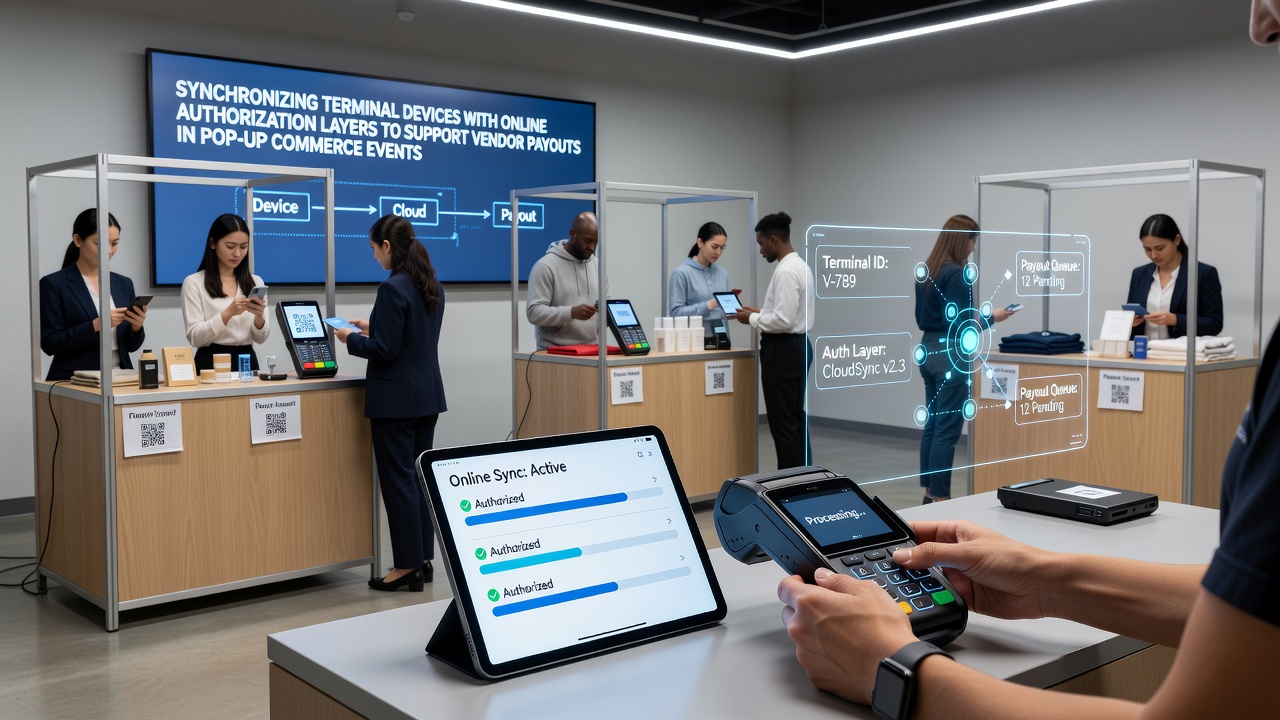
Synchronizing Terminal Devices with Online Authorization Layers to Support Vendor Payouts in Pop-Up Commerce Events
Pop-up commerce events bring together multiple vendors in temporary locations where quick setup and reliable transaction handling become essential for smooth operations, and synchronizing terminal devices with online authorization layers plays a central role in managing these flows while enabling timely vendor payouts.
Core Components of Device and Authorization Integration
Terminal devices at these events capture payment details on-site while online authorization layers verify transactions through secure cloud connections, and this pairing allows vendors to process sales without delays that often arise from standalone hardware setups. Researchers have documented how such synchronization reduces settlement times by linking local hardware directly to centralized verification systems that confirm funds availability in real time.
Data from payment network analyses show that integrated systems handle higher volumes during peak hours at festivals and markets, where vendors rely on consistent connectivity to avoid interruptions. Those who've examined these configurations note that terminals equipped with API interfaces transmit encrypted data to authorization servers, which then route approvals back within seconds to complete each sale.
Mechanics Behind Payout Distribution
Once transactions receive approval, the authorization layers trigger automated reconciliation processes that allocate funds to individual vendor accounts based on pre-registered identifiers, and this mechanism supports disbursements even when events span multiple days or locations. Studies indicate that platforms using these synchronized setups achieve settlement cycles as short as 24 hours for many participants, compared to longer waits in disconnected systems.
Event organizers often configure rules within the authorization software to split payments according to vendor agreements, which ensures each participant receives accurate amounts after deductions for fees or shared costs. Observers note that this approach works particularly well in multi-vendor clusters because it minimizes manual intervention and associated errors during high-activity periods.
Connectivity Requirements for Temporary Retail Environments
Pop-up setups frequently operate in areas with variable network conditions, so the synchronization process incorporates fallback protocols that maintain authorization even during brief outages by queuing data for later transmission. Figures from industry reports reveal that hybrid cellular and Wi-Fi connections form the backbone of these systems, allowing terminals to stay linked to online layers without constant manual reconfiguration.
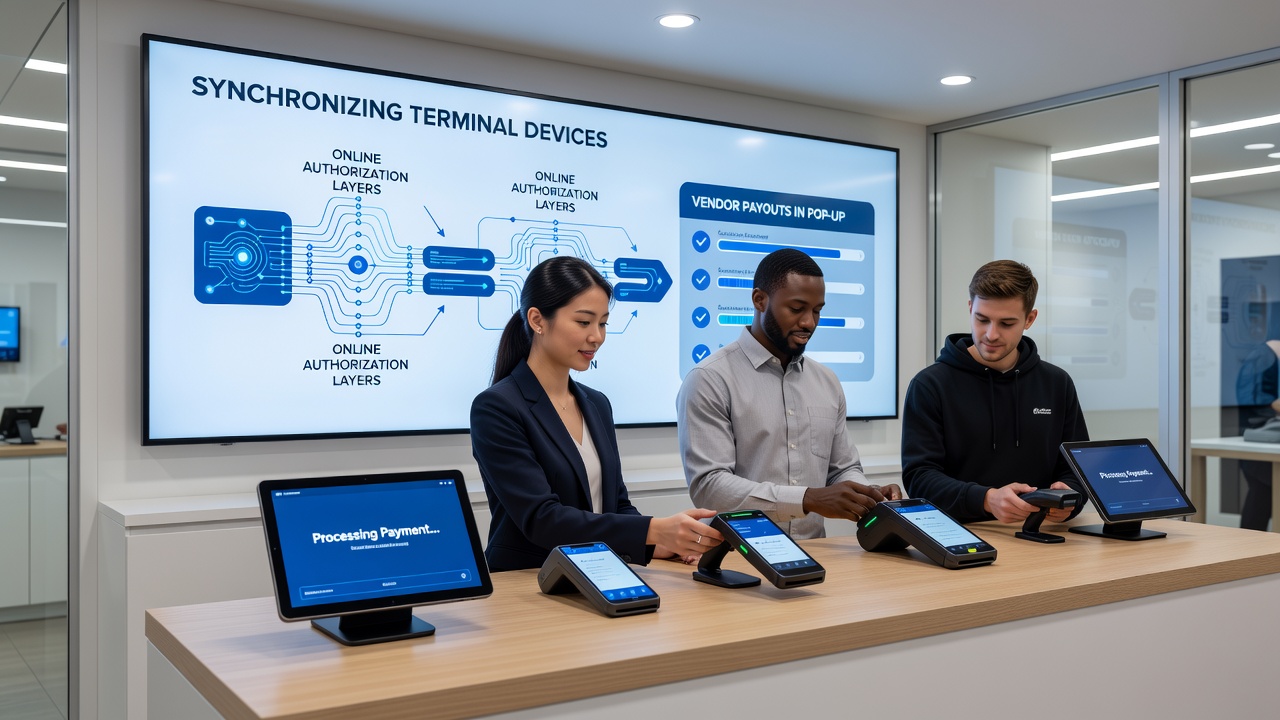
Technicians deploy portable routers and signal boosters at many events to stabilize these links, and the resulting stability supports continuous transaction processing that feeds directly into payout calculations. According to analyses by the Federal Reserve payment systems division, reliable connectivity correlates with fewer failed authorizations across seasonal retail gatherings.
Security Protocols in Synchronized Systems
Encryption standards protect data moving between terminals and authorization layers, while tokenization replaces sensitive card information with unique identifiers that prevent exposure during transmission. Compliance frameworks require regular audits of these connections, and data from security assessments show reduced incidence of breaches when vendors follow established token handling procedures.
Event planners coordinate with payment processors to apply access controls that limit who can view payout details, and this layered approach maintains integrity across the entire transaction chain. Those monitoring compliance trends highlight that systems updated before the July 2026 regulatory adjustments already incorporate enhanced logging features to track every authorization step.
Operational Examples from Recent Gatherings
At a series of outdoor markets held across North America last season, organizers deployed synchronized terminal networks that processed over 50,000 transactions per event while distributing vendor funds through automated channels tied to the authorization layer. Similar implementations in European seasonal fairs demonstrated how pre-event testing of device-to-server links prevented common bottlenecks during setup.
One documented case involved a weekend craft fair where real-time reconciliation allowed vendors to receive partial payouts midway through the event, based on cumulative sales data pulled from the connected systems. Research indicates these practices scale effectively as more temporary retail operations adopt standardized interfaces for hardware and online components.
Conclusion
Synchronization between terminal devices and online authorization layers creates a foundation for efficient vendor payouts in pop-up commerce by streamlining verification, reconciliation, and distribution processes that operate reliably under event conditions. Continued refinement of these connections supports expanding use across diverse temporary retail formats while meeting established security and timing standards.