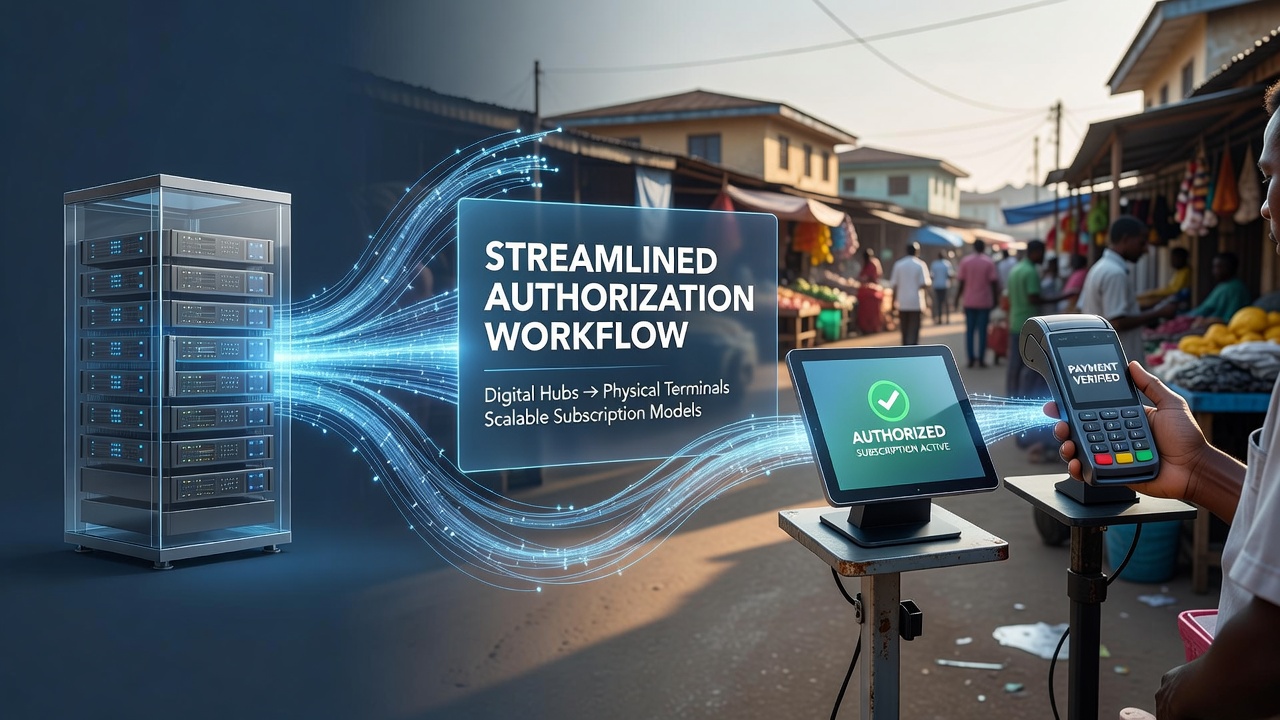
Streamlining Authorization Workflows Between Digital Hubs and Physical Terminals to Support Scalable Subscription Models in Emerging Markets
Emerging markets continue to see rapid growth in subscription-based services, and organizations operating across both online platforms and physical locations have begun aligning their authorization processes to handle recurring charges without disruption. Research from the World Bank shows that digital payment adoption in regions such as sub-Saharan Africa and Southeast Asia reached 47 percent of adults by late 2025, creating demand for systems that move authorization requests seamlessly between cloud-based hubs and in-store terminals.
Authorization workflows typically start when a customer initiates a subscription through a mobile app or website, yet the same account often requires validation at a physical point of sale during product pickup or service activation. Data indicates that delays occur when separate ledgers fail to synchronize token status or subscription status across these environments, leading operators to implement unified protocols that share encrypted credentials in real time.
Core Components of Integrated Authorization Systems
Modern setups rely on tokenization services that generate single-use or reusable references for recurring billing, while hardware terminals receive updated status flags through secure APIs. According to GSMA Intelligence reports covering mobile money ecosystems, markets in Kenya and Indonesia processed over 2.8 billion mobile transactions monthly in 2025, many tied to subscription renewals that also triggered in-person redemptions. These figures reveal the necessity of maintaining consistent authorization states so that a failed digital charge does not block a terminal from accepting an offline top-up or renewal.
Observers note that middleware layers now sit between digital hubs and terminal firmware, translating authorization requests into formats compatible with legacy card readers still common in smaller retail outlets. Studies from academic institutions in Brazil have documented reductions in failed renewal attempts when such middleware enforces a 300-millisecond timeout before falling back to cached token validation, allowing terminals to complete transactions even during brief network outages.
Supporting Subscription Scalability Across Regions
Subscription models in emerging markets frequently incorporate micro-payments and tiered pricing that adjust based on local currency fluctuations or usage data. Payment processors have responded by deploying dynamic routing engines that direct authorization traffic to the nearest regional node before confirming terminal availability. This approach reduces latency for customers in rural areas where connectivity remains intermittent yet subscription renewals still occur at physical kiosks or agent locations.
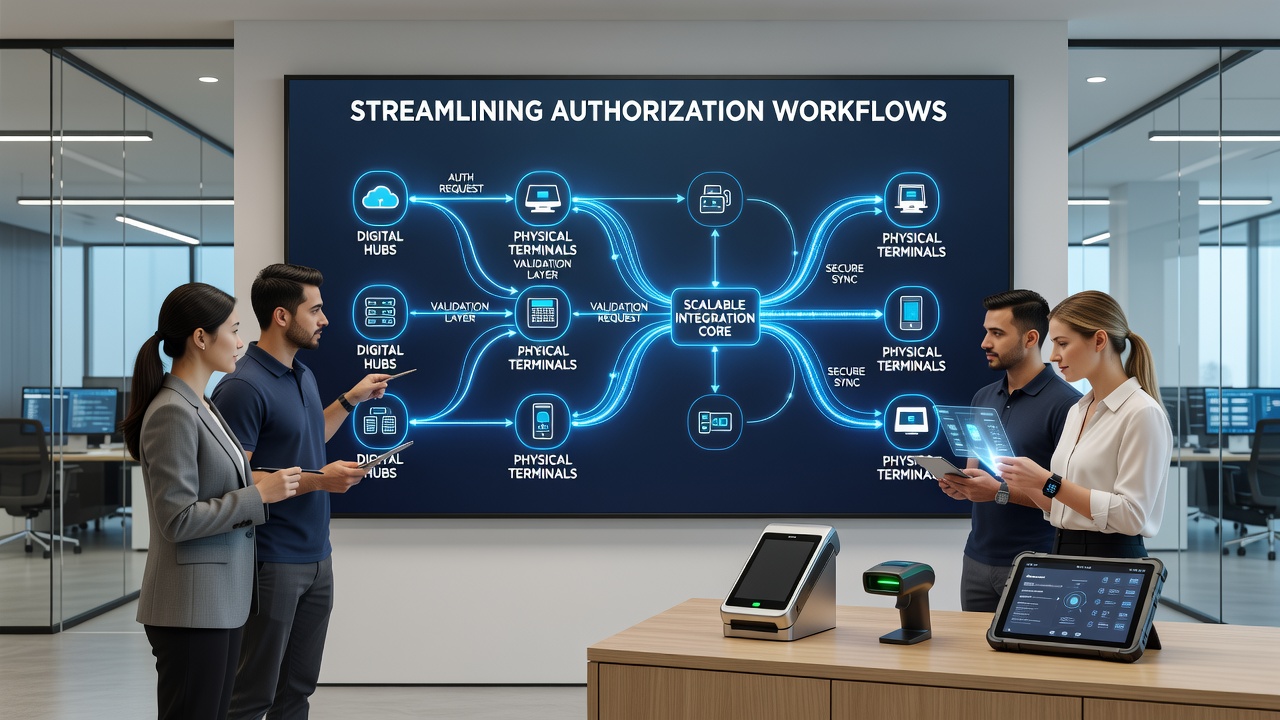
Take one logistics provider in Vietnam that expanded its equipment rental subscriptions in early 2026; the company synchronized its online portal with handheld terminals used by field agents, resulting in a reported 34 percent drop in renewal disputes according to internal metrics shared with industry analysts. Similar patterns appear in reports covering India’s growing appliance rental sector, where unified authorization cut chargeback rates by aligning digital wallet debits with terminal-confirmed deliveries.
Security and Compliance Considerations
Regulatory frameworks in multiple jurisdictions require end-to-end encryption for any data moving between digital services and physical devices. Encryption standards such as AES-256 combined with EMVCo token specifications have become standard practice, ensuring that subscription credentials never travel in plaintext. Researchers at technical universities in Singapore have published findings on lightweight key rotation mechanisms that terminals can execute without requiring full firmware updates, a feature particularly useful for operators managing thousands of devices across dispersed locations.
July 2026 marks the scheduled rollout of updated interoperability guidelines from the African Payments Union, which aim to standardize authorization message formats between digital platforms and terminal networks in participating member states. Early testing indicates these guidelines will support cross-border subscription renewals by allowing terminals in one country to validate tokens issued by hubs in another, provided both endpoints adhere to the new schema.
Operational Outcomes Observed in Practice
Companies that have deployed synchronized authorization report measurable improvements in renewal completion rates and reduced manual reconciliation. One study covering Colombian retail chains found that terminals equipped with real-time status polling completed 19 percent more recurring transactions per shift compared with systems relying on daily batch updates. These outcomes stem from the ability of digital hubs to push status changes to terminals within seconds rather than hours, minimizing instances where a customer’s subscription appears active online but inactive at the point of service.
Hardware vendors have also introduced terminals with embedded secure elements capable of storing limited subscription metadata locally, allowing offline authorization for low-value renewals when connectivity drops. Data collected from deployments in the Philippines shows that such terminals maintained 98 percent uptime for subscription-related functions during monsoon-related network disruptions in 2025.
Conclusion
Streamlined authorization between digital hubs and physical terminals continues to underpin scalable subscription services throughout emerging markets, supported by tokenization standards, middleware translation layers, and evolving regulatory alignment. Evidence from multiple regions demonstrates that synchronized workflows reduce failed renewals and support consistent customer experiences whether transactions originate online or at a terminal. As July 2026 approaches and new interoperability guidelines take effect, operators gain additional tools to expand subscription offerings while maintaining secure, efficient authorization across both digital and physical channels.