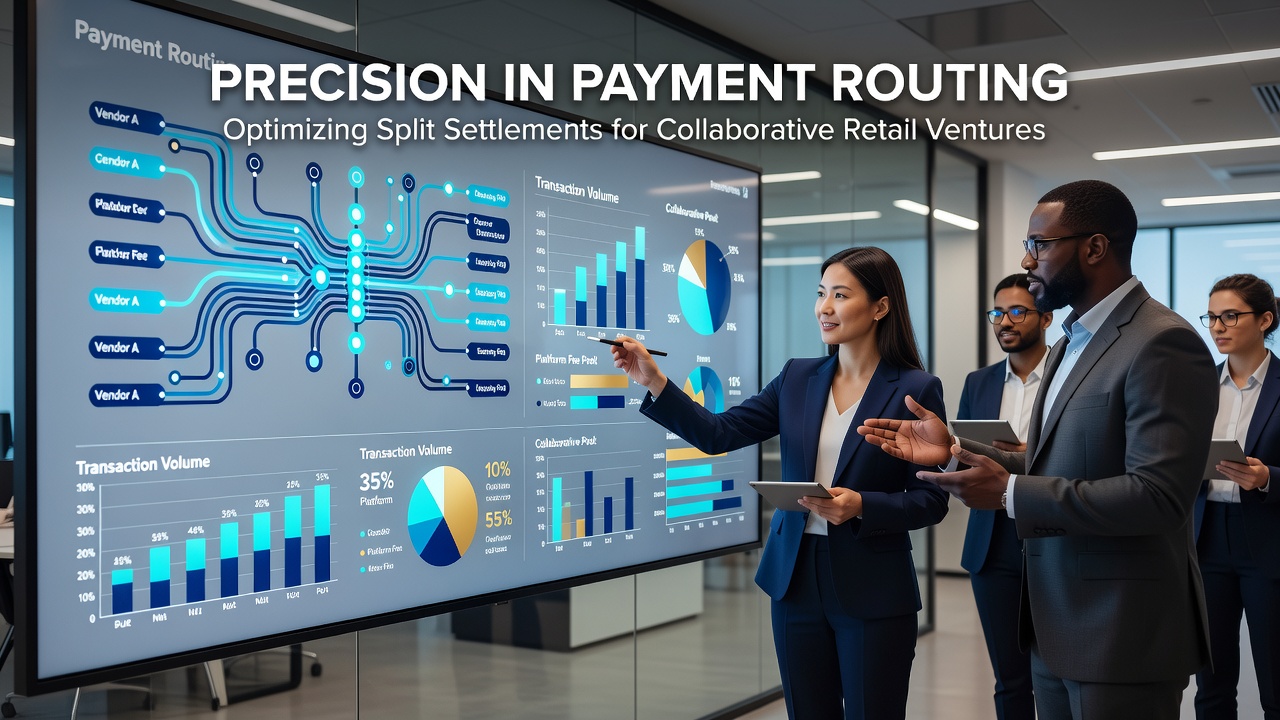
Precision in Payment Routing: Optimizing Split Settlements for Collaborative Retail Ventures
Collaborative retail ventures such as pop-up markets, multi-vendor events, and shared retail spaces rely on split settlements to distribute funds accurately among participants. Precision in payment routing ensures that each vendor receives the correct share of a transaction without delays or discrepancies, and this process has gained attention as retail models expanded through 2026. Systems now integrate routing protocols that match transaction data with predefined settlement rules, allowing real-time allocation across accounts.
Core Mechanisms Behind Split Settlements
Payment routing in these setups begins with transaction authorization followed by immediate division based on vendor agreements. Software platforms calculate percentages or fixed amounts at the point of sale, then direct funds through secure channels to each recipient's account. Data from the Bank for International Settlements shows that such automated routing reduced settlement times in multi-party transactions by aligning authorization layers with inventory records during high-volume periods like summer festivals.
One common approach uses tokenization to link each portion of a payment to specific merchant identifiers, which prevents mismatches when multiple parties share a single terminal or online checkout. Observers note that this method supports temporary retail clusters where vendors rotate daily, since routing tables update dynamically without manual intervention. Research from Payments Canada indicates that precision routing cut reconciliation errors in collaborative events by connecting directly to banking networks for same-day transfers.
Challenges in Multi-Vendor Environments
Collaborative retail often involves fluctuating vendor lists, varying commission structures, and cross-border elements that complicate routing. Systems must handle currency conversions alongside splits while maintaining compliance with regional payment standards. In August 2026 several event organizers reported using updated protocols that flag discrepancies before funds move, which keeps settlement accuracy high even when sales spike during peak hours.
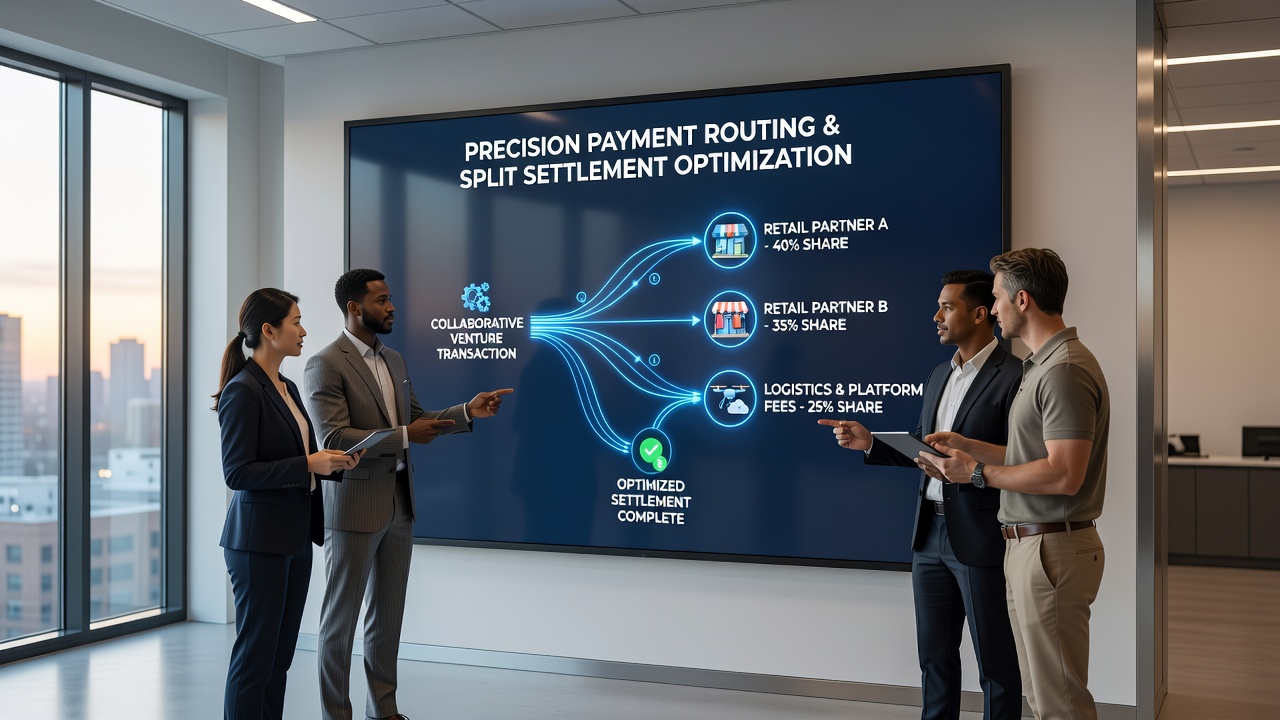
Latency issues arise when routing paths cross multiple processors, yet newer configurations employ priority queues to process high-value splits first. Studies from the European Central Bank highlight how these queues maintain order in shared retail platforms by sequencing authorizations according to predefined vendor hierarchies. Retail operators therefore avoid backlogs that previously delayed payouts for smaller participants in group ventures.
Optimization Techniques and Technology Integration
Advanced routing engines apply machine learning models trained on historical transaction patterns to predict optimal paths for each split. These models factor in processor fees, network uptime, and settlement windows to minimize costs while preserving speed. A report issued by the Federal Reserve in early 2026 documented that integrated routing reduced overall processing expenses for collaborative setups by directing splits through the lowest-cost available rails at the moment of authorization.
Inventory synchronization plays a supporting role because routing logic can reference stock levels to adjust splits when returns or partial fulfillments occur. Developers connect these systems through APIs that update settlement rules in real time, which proves useful for seasonal markets where product mixes change frequently. Those who manage multi-vendor clusters often discover that embedding these connections prevents overpayments and simplifies end-of-day reporting.
Regulatory and Security Considerations
Payment routing must comply with data protection rules that vary by jurisdiction, including requirements for encryption during transmission and storage of settlement details. Platforms incorporate audit trails that log every routing decision, allowing regulators to verify that funds reached the intended accounts. Industry data shows that venues adopting such trails experienced fewer disputes in collaborative retail arrangements throughout 2025 and into the following year.
Security protocols also address potential fraud vectors specific to split transactions, such as altered routing tables that redirect portions of payments. Regular penetration testing and role-based access controls limit exposure, while tokenized credentials replace sensitive account information during the routing process. Experts have observed that these measures maintain trust among vendors who share infrastructure but operate as independent entities.
Conclusion
Precision routing for split settlements continues to evolve alongside collaborative retail formats, with systems now capable of handling complex allocations at scale. Integration of real-time data, regulatory compliance, and cost-optimization tools supports accurate fund distribution without manual reconciliation. As retail ventures expand across channels, the underlying routing infrastructure remains central to operational efficiency in shared environments.