Payment Authorization Sequences for Inventory-Linked Charge Cycles in Pop-Up Vendor Networks
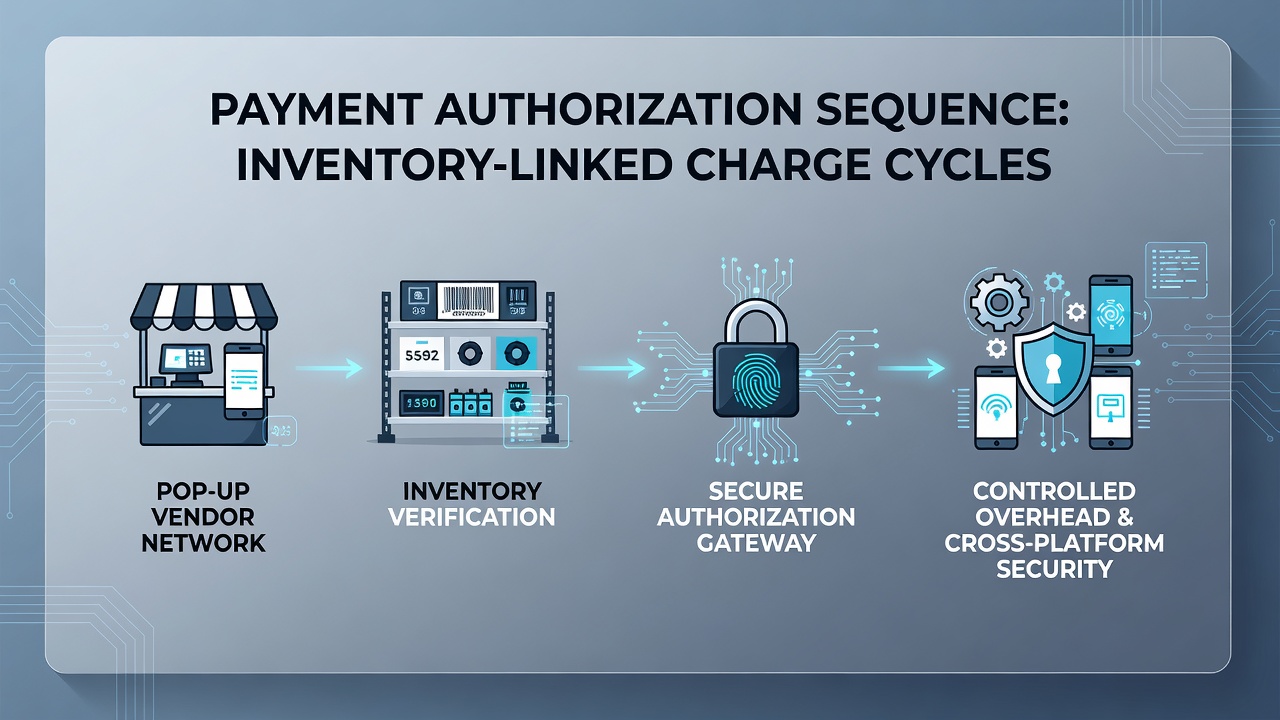
Payment authorization sequences in pop-up vendor networks operate through coordinated steps that connect transaction approval directly to real-time inventory data, allowing charge cycles to adjust based on stock levels across temporary retail clusters. These sequences begin with a vendor terminal or mobile device sending an authorization request that includes item quantities, prices, and available units, which the payment processor then validates against merchant account rules before confirming the charge. Data compiled through July 2026 indicates that such linkages reduce overcharges in multi-vendor events by synchronizing deductions from inventory databases immediately after approval.
Core Components of Authorization Sequences
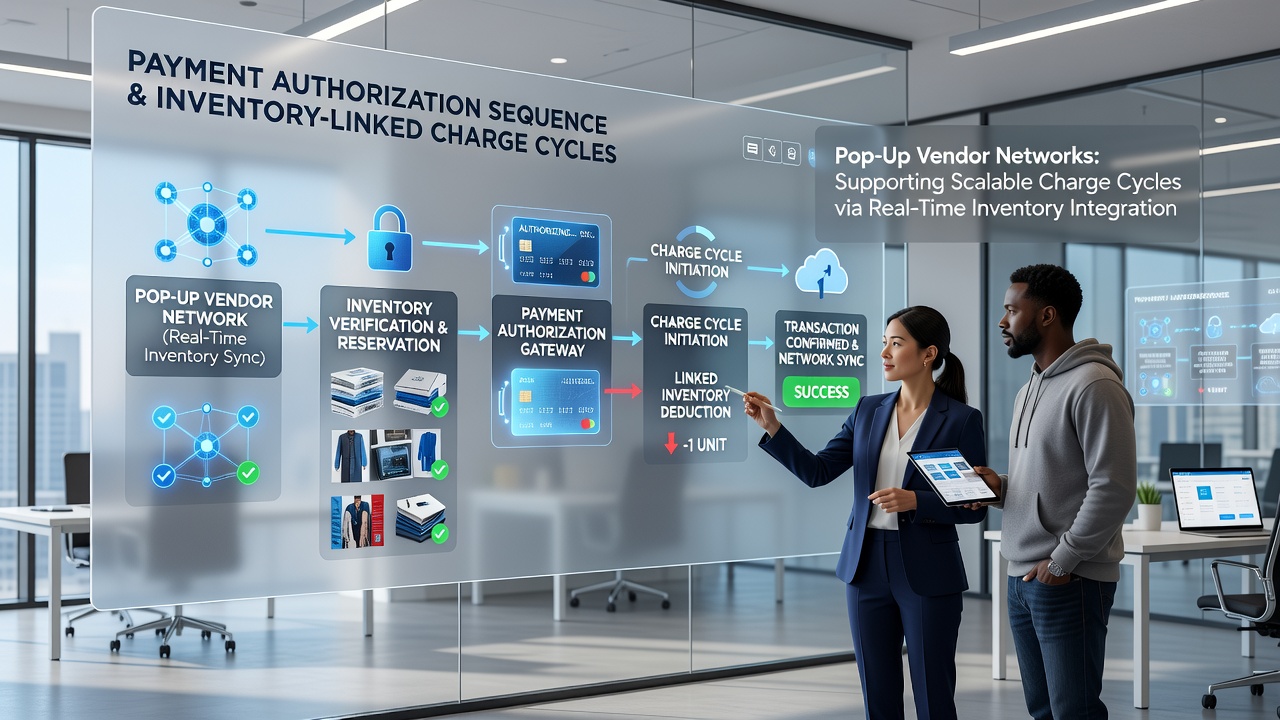
Authorization requests move through several layers where the initial token capture occurs at the point of sale, followed by verification against fraud detection parameters and inventory thresholds. Observers note that when a requested item quantity exceeds current stock records, the sequence flags the transaction for review or partial approval, which keeps overhead in check by avoiding fulfillment of unavailable goods. This process integrates with charge cycle automation so that successful authorizations trigger immediate updates to shared ledgers used by multiple vendors at the same event site.
Inventory Linkage Mechanisms
Inventory-linked charge cycles rely on API connections between payment gateways and stock management tools, where each approved transaction deducts units in real time rather than at batch closeout. Researchers have documented cases in which pop-up networks at seasonal markets use these connections to prevent double-selling across stalls that share supplier feeds. The sequence typically includes a pre-authorization hold that reserves both funds and inventory slots until the final capture step completes, at which point the system releases any unused holds to maintain accurate availability counts.
Security Protocols Across Platforms
Cross-platform security in these networks incorporates tokenization and encryption at the authorization stage to protect card details while the system queries inventory servers. According to guidelines from the PCI Security Standards Council, each sequence must isolate sensitive data from inventory databases through segmented channels that prevent unauthorized access during simultaneous vendor operations. European Central Bank reports on payment infrastructure highlight how standardized encryption during authorization reduces exposure in temporary setups that lack fixed network perimeters.
Those who manage pop-up clusters often deploy credential vaulting within the authorization flow so that recurring vendor participants can reuse verified tokens without re-entering details at each event. This approach supports controlled overhead because it shortens transaction times while maintaining compliance checks tied to inventory values. When a charge cycle spans multiple platforms, such as a mobile app order feeding into an on-site terminal, the sequence routes the request through a central orchestrator that confirms stock across all connected channels before releasing the authorization code.
Overhead Reduction Through Timing Strategies
Timing strategies within authorization sequences allow networks to batch non-critical inventory queries after initial approval, which lowers per-transaction processing fees in high-volume pop-up environments. Studies from academic sources on retail technology show that delaying full ledger synchronization until after peak hours prevents system bottlenecks without compromising security layers. Vendors in these setups therefore experience fewer declined transactions because the sequence prioritizes fund verification first and inventory reconciliation second.
Implementation in Multi-Vendor Events
Take one documented rollout at a regional craft fair circuit where organizers linked authorization protocols to a shared inventory platform; the result was that each stall terminal received updated stock data within seconds of a neighboring sale. This configuration enabled charge cycles to adapt automatically when items sold out mid-event, directing customers toward available alternatives without manual intervention. Observers note that such adaptations keep operational costs lower by reducing waste from unsold perishable goods tracked in the same system.
Conclusion
Payment authorization sequences that support inventory-linked charge cycles deliver measurable coordination benefits for pop-up vendor networks by embedding stock checks into every approval step. teh combination of tokenization, real-time updates, and cross-platform routing maintains security standards while containing overhead across temporary retail configurations. As networks expand, these sequences continue to evolve through refined API integrations that align authorization timing with event-specific demands.