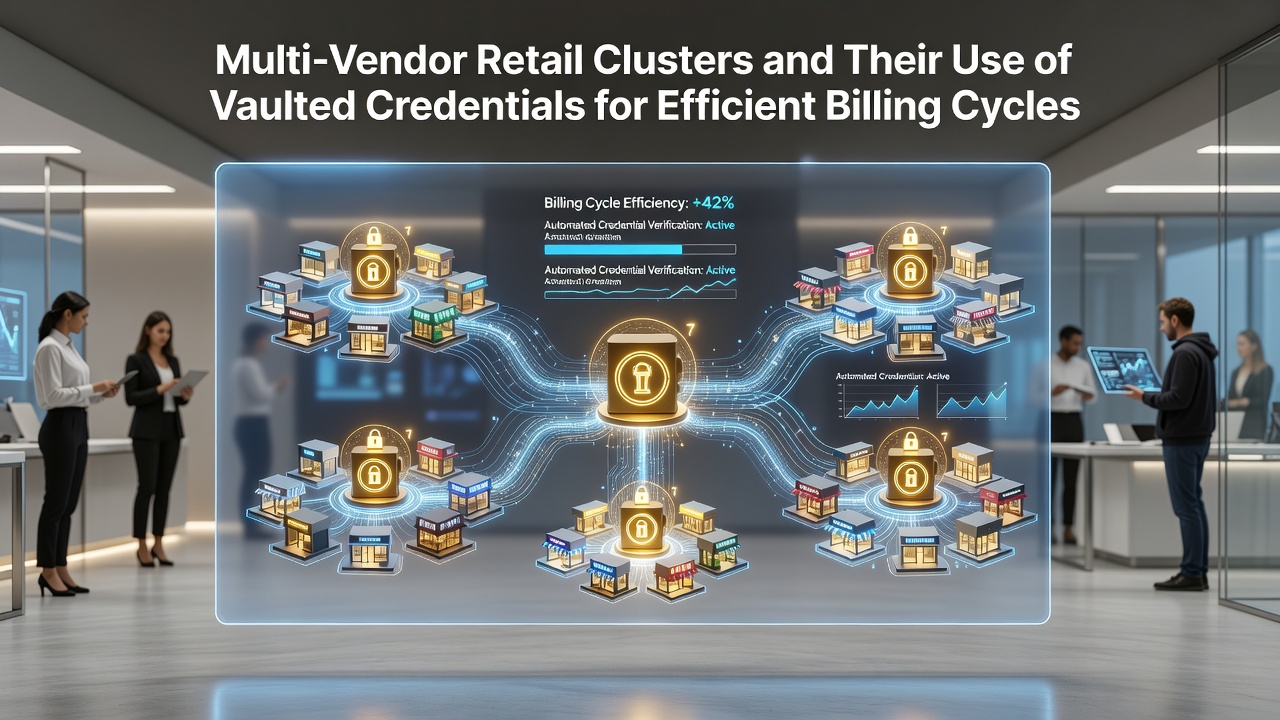
Multi-Vendor Retail Clusters Leverage Vaulted Credentials to Optimize Billing Cycles
Multi-vendor retail clusters bring together independent sellers under unified physical or digital spaces, and these arrangements rely on vaulted credentials to handle billing cycles with reduced manual intervention and lower processing overhead. Vaulted credentials store tokenized payment data in secure repositories so that recurring charges, batch settlements, and cross-vendor disbursements occur without repeated entry of sensitive card details. Observers note that this approach aligns authorization timing with inventory updates and sales reporting across participating vendors.
Core Mechanics of Vaulted Credential Systems
Payment processors issue tokens that replace primary account numbers, and these tokens reside in hardware security modules or cloud-based vaults certified under standards such as those outlined by the National Institute of Standards and Technology. When a sale completes at one stall or kiosk within the cluster, the system references the vault rather than prompting for new credentials, which shortens authorization windows from seconds to milliseconds in high-volume periods. Data shows that clusters using this method record fewer declined transactions because stored credentials undergo continuous validation against issuer updates.
Clusters often schedule billing cycles at fixed intervals, typically daily or weekly, and vaulted credentials allow simultaneous submission of multiple vendor charges to acquiring banks. The process groups transactions by merchant ID while maintaining separate ledger entries for each seller, and settlement files transmit through encrypted channels that comply with PCI DSS requirements. Researchers at academic institutions studying retail technology have documented that synchronized disbursements reduce reconciliation time by integrating directly with point-of-sale terminals and online storefronts.
Integration with Inventory and Reporting Tools
Inventory synchronization occurs when point-of-sale devices query the same vault during checkout, ensuring that stock levels update in real time while payment authorization proceeds. This linkage prevents overselling across vendors who share warehouse space or fulfillment centers. Figures from industry reports indicate that clusters managing seasonal peaks, such as holiday markets projected through November 2026, achieve higher throughput when credential vaults feed both billing engines and stock management platforms without duplicate data entry.
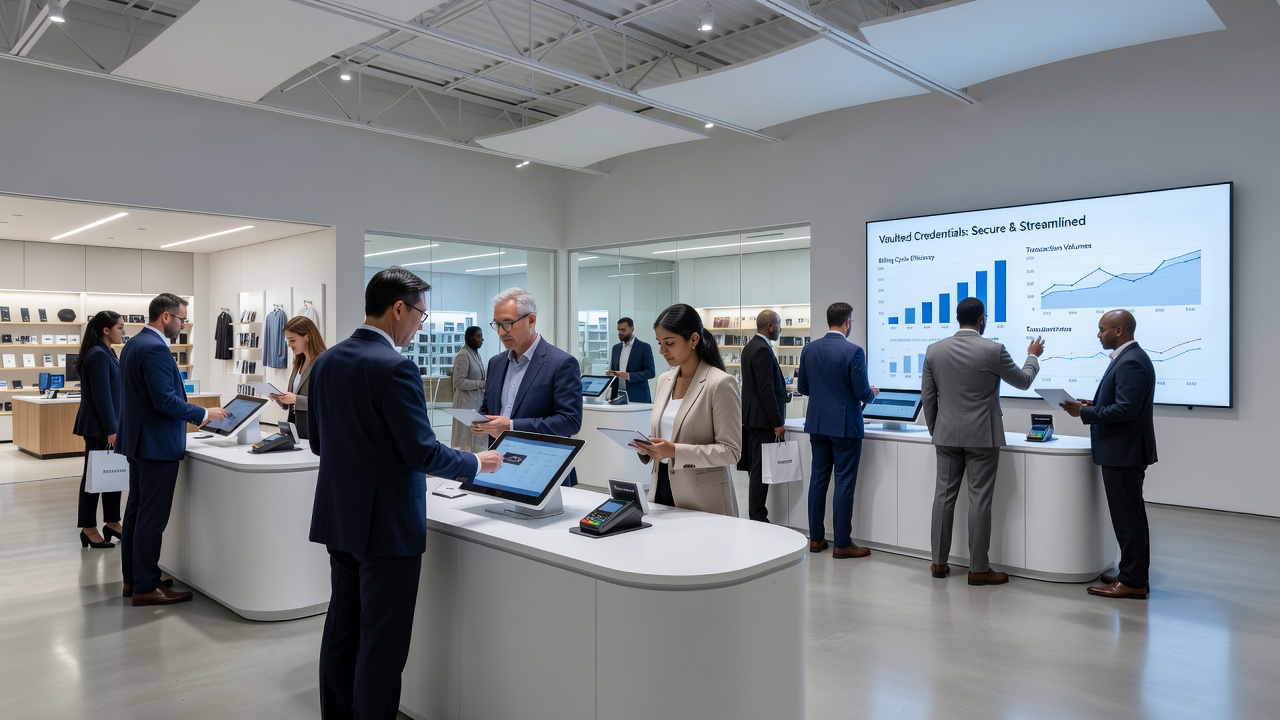
Reporting dashboards pull tokenized transaction logs to generate vendor-specific statements, and these statements feed automated payout routines that split funds according to pre-agreed revenue shares. Observers note that the elimination of manual credential handling lowers error rates in cross-border clusters where currency conversion and tax calculations add complexity. What's interesting is how the same vault supports both in-person terminal transactions and recurring subscription elements when clusters offer membership programs or loyalty billing.
Security Protocols and Compliance Standards
Encryption at rest and in transit protects vault contents, and access controls limit retrieval to authorized processors only. The European Union Agency for Cybersecurity has published guidelines on credential isolation that many multi-vendor operators now reference when designing shared systems. Periodic audits verify that tokens cannot be reverse-engineered into original card data, and this verification supports regulatory compliance across different jurisdictions.
Clusters operating in North America often align with guidelines from the Federal Trade Commission on consumer data protection, whereas those in Asia-Pacific regions incorporate recommendations from local financial authorities. The consistent thread remains that vaulted credentials reduce the attack surface because primary account numbers never reside on individual vendor devices. Studies conducted by university research teams have shown measurable declines in data breach incidents when retail clusters migrate from local storage to centralized vaults.
Operational Examples Across Different Regions
Take one North American marketplace where multiple food vendors share a common payment terminal network; the vault processes daily sales batches and distributes proceeds within 48 hours while maintaining separate tax reporting for each operator. In European covered markets, similar setups handle seasonal vendor rotations by updating vault permissions without re-onboarding customers. Australian retail associations have reported that credential vaulting supports efficient handling of contactless payments in temporary cluster configurations during large-scale events.
These implementations demonstrate how vaulted systems adapt to fluctuating vendor counts and changing product catalogs. The architecture supports rapid onboarding because new participants receive merchant IDs linked to the existing vault rather than establishing separate payment accounts from scratch.
Conclusion
Multi-vendor retail clusters achieve efficient billing cycles through the structured use of vaulted credentials that centralize authorization, reduce manual processes, and maintain compliance with evolving security standards. The approach integrates with inventory tools and reporting platforms to create synchronized financial flows across independent sellers. As retail environments continue to evolve through November 2026 and beyond, these systems provide the technical foundation for scalable, low-overhead operations in shared commercial spaces.