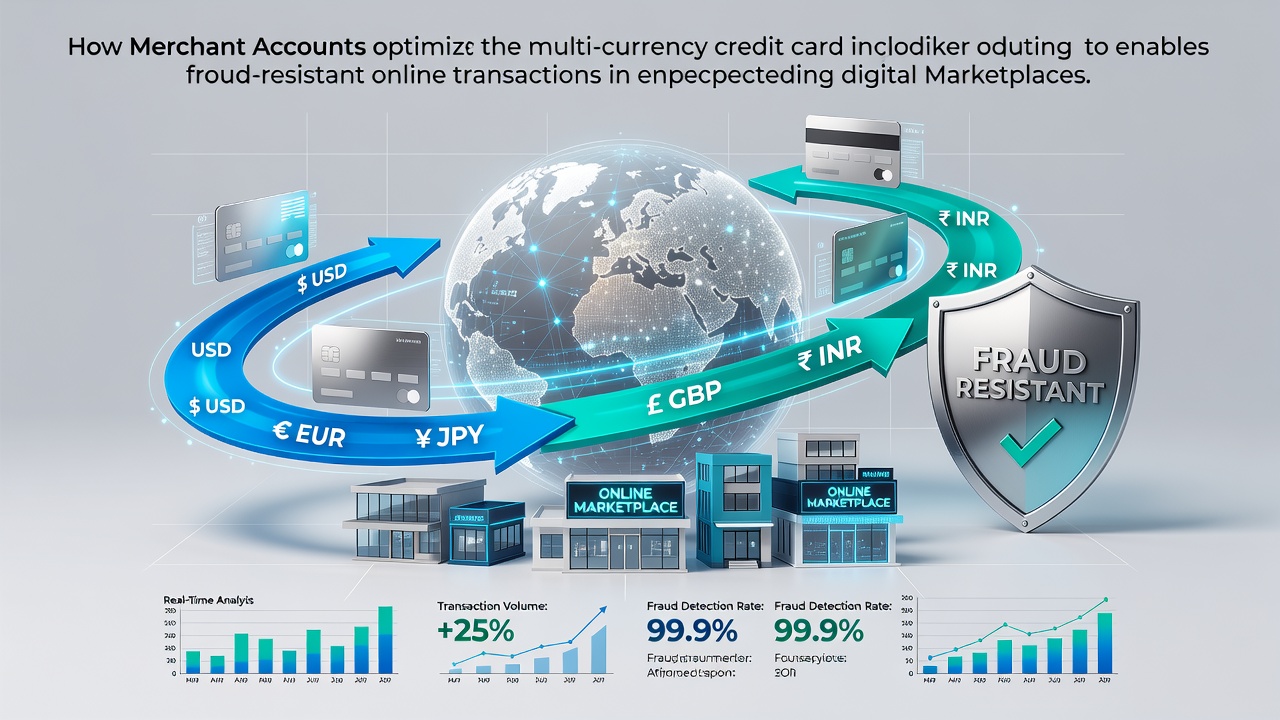
How Merchant Accounts Optimize Multi-Currency Credit Card Handling to Support Fraud-Resistant Online Transactions in Expanding Digital Marketplaces
Merchant accounts serve as the foundation for businesses handling credit card payments across borders, and they streamline multi-currency operations through integrated conversion tools that align exchange rates with real-time authorization protocols. These accounts connect directly to acquiring banks and processors, which means transactions in euros, yen, or dollars move through unified ledgers without requiring separate setups for each region. Observers note that this centralization reduces latency in digital marketplaces where shoppers from multiple countries complete purchases simultaneously. Data from global payment networks shows that merchant accounts equipped with dynamic currency conversion features allow sellers to present prices in a customer's local denomination while settling funds in the merchant's preferred currency. Processors apply these conversions at the point of authorization, and they incorporate compliance checks that verify cardholder details against international standards. Such mechanisms support expanding digital marketplaces by enabling platforms to scale without fragmenting their payment infrastructure.Core Mechanisms for Multi-Currency Optimization
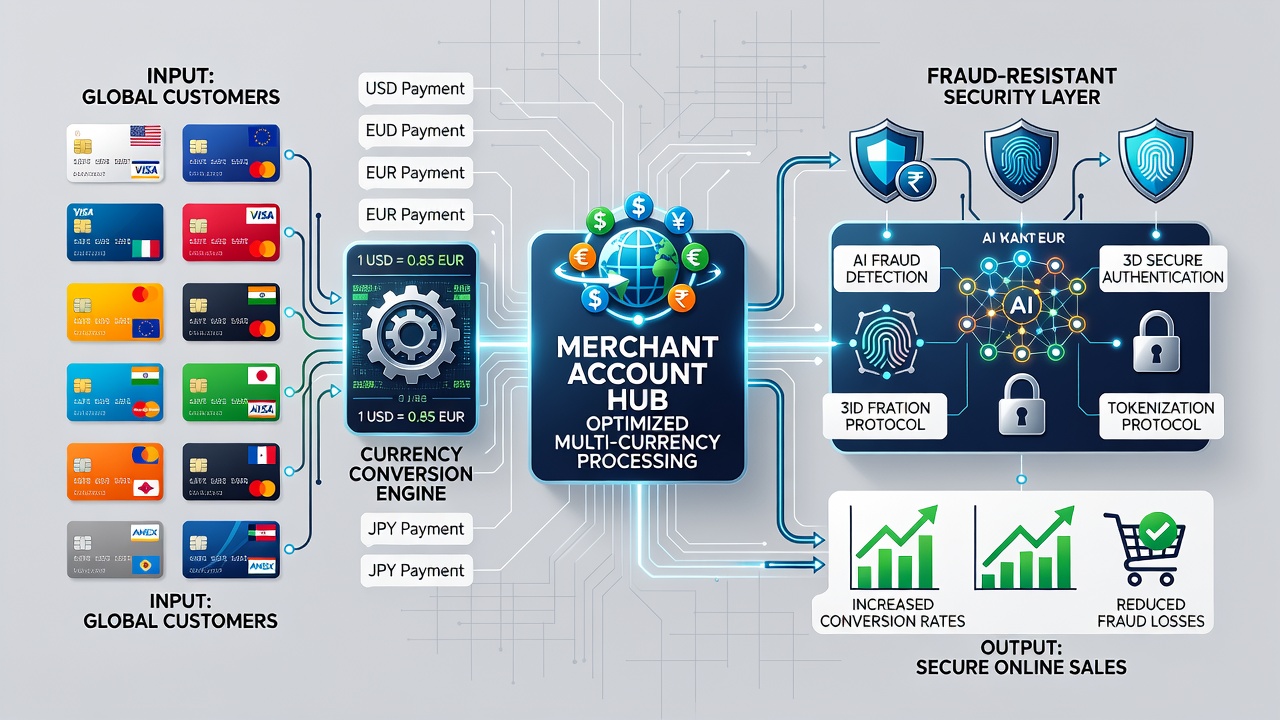
Processors integrate API layers into merchant accounts that pull live exchange data from financial institutions, and this integration ensures rates reflect market conditions at the exact moment of each transaction. Accounts then route the converted amount through secure channels that maintain consistency across payment gateways. Researchers at institutions tracking digital commerce have documented how these systems cut reconciliation errors by linking currency ledgers directly to inventory and order management tools.
Tokenization plays a central role here as well, since it replaces sensitive card data with unique identifiers that work across currency boundaries. When a customer in one region uses a card issued elsewhere, the merchant account validates the token against fraud databases before completing the conversion. This approach keeps card details shielded while supporting high volumes of cross-border activity in growing online marketplaces.
Fraud Resistance Through Layered Verification
Merchant accounts strengthen fraud defenses by embedding rules that evaluate transaction patterns across currencies, and they flag anomalies such as sudden spikes from unfamiliar locations. Systems apply velocity checks and device fingerprinting during authorization, while also enforcing 3D Secure protocols that add an extra authentication step for higher-risk exchanges. According to reports from the European Central Bank, these combined measures have contributed to measurable declines in unauthorized payment attempts in multi-currency environments.
Real-time monitoring tools within the accounts analyze data points including IP geolocation, purchase history, and currency mismatches, then trigger holds or additional verification when thresholds are exceeded. Businesses operating in digital marketplaces benefit because the same framework handles both domestic and international cards without separate fraud teams for each currency. Evidence from payment security studies indicates that accounts using machine learning models for pattern recognition achieve faster detection rates compared with static rule sets alone.
Adaptation to Expanding Digital Marketplaces
As marketplaces grow to include sellers and buyers from additional countries, merchant accounts expand their currency support through modular add-ons that activate new settlement options without rebuilding core systems. Processors update compliance modules automatically to match evolving regulations, such as those governing data localization or consumer protections. By June 2026, several major acquiring banks had rolled out enhanced reporting dashboards that aggregate multi-currency fraud metrics into single views for platform operators.
These accounts also facilitate settlement in multiple currencies by maintaining pooled accounts at partner banks worldwide, which reduces foreign exchange fees and speeds up fund availability. Marketplaces that adopt this structure report smoother cash flow cycles because incoming payments convert and deposit according to predefined schedules. Industry data compiled by the Reserve Bank of Australia highlights how optimized multi-currency handling correlates with higher transaction completion rates in cross-border retail channels.
Integration with Broader Payment Ecosystems
Merchant accounts link with payment gateways that already manage inventory synchronization and order routing, and this connectivity allows fraud signals to influence downstream processes like shipment holds. When a transaction passes currency conversion yet raises a risk score, the system can pause fulfillment until manual review occurs. Such coordination proves essential in digital marketplaces where high order volumes leave little margin for manual intervention on every alert.
Updates to account configurations occur through centralized portals that propagate changes across all supported currencies at once, and this efficiency supports rapid scaling as marketplaces add new product categories or regional storefronts. Observers tracking payment trends point out that accounts incorporating these linkages maintain lower operational overhead while meeting security benchmarks set by card networks.
Conclusion
Merchant accounts achieve optimization in multi-currency credit card handling by combining live conversion tools, tokenization, and adaptive fraud monitoring within a single framework that scales alongside digital marketplaces. The result is a system where transactions clear efficiently across borders while built-in verification layers limit exposure to fraudulent activity. As platforms continue to expand, these accounts provide the infrastructure that keeps payment flows secure and synchronized with broader commercial operations.