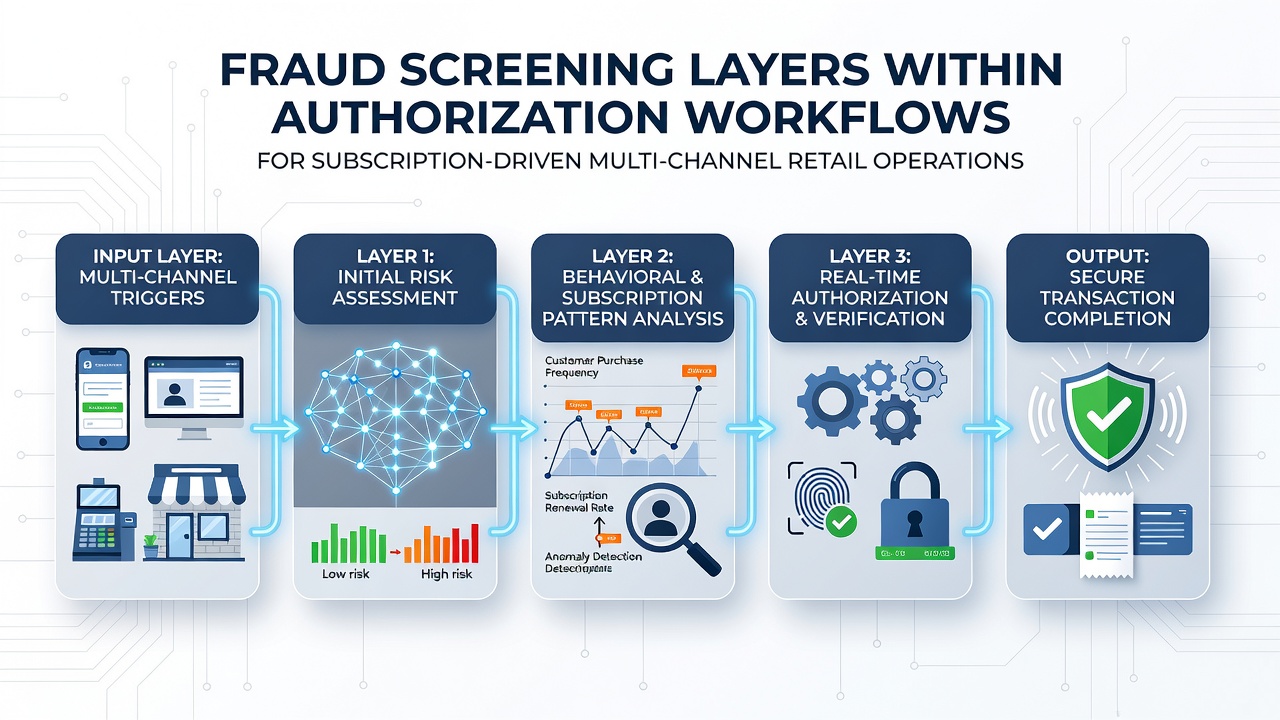
Fraud Screening Layers Within Authorization Workflows for Subscription-Driven Multi-Channel Retail Operations
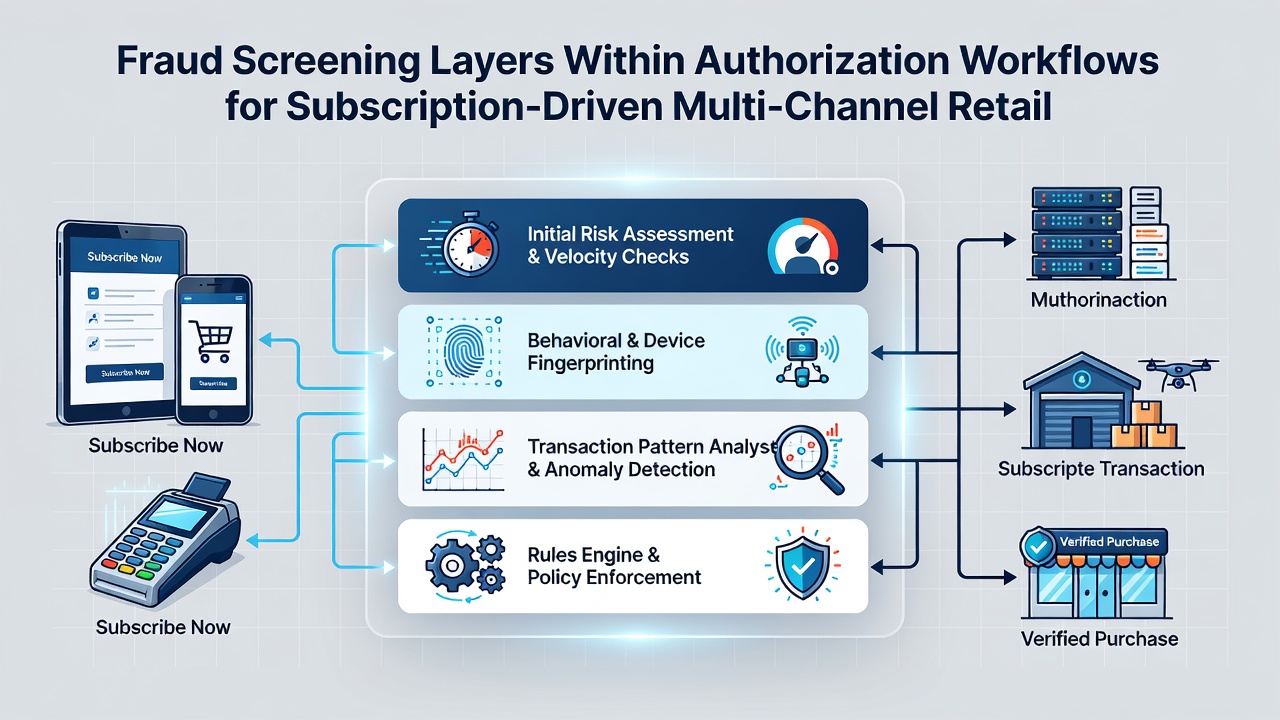
Observers note that subscription-driven retail operations spanning online platforms, point-of-sale terminals, and mobile channels face rising pressure to embed fraud screening at multiple stages of the authorization workflow, and data from industry reports shows these layers combine rule-based filters, behavioral analytics, and machine learning models to evaluate transactions before funds move. Retailers that process recurring charges across channels must align these checks with inventory systems and customer profiles so that a failed screen on one channel does not disrupt legitimate activity elsewhere. The first screening layer typically applies velocity rules that track the number of authorization attempts from a single account or device within a defined window, while subsequent layers examine device fingerprinting data, IP reputation scores, and historical chargeback patterns linked to the payment credentials. When a subscription renewal request arrives through an e-commerce gateway at the same time a customer presents a card at a physical terminal, the workflow routes both requests through a shared risk engine that applies consistent thresholds yet allows channel-specific adjustments for latency tolerance.Core Components of Multi-Layer Screening
Research indicates that effective authorization workflows separate static data checks from dynamic behavioral analysis, and the static layer evaluates card BIN ranges, address verification results, and known fraud databases before passing the request to the dynamic layer that scores the transaction against real-time patterns. Subscription businesses often configure the static layer to flag mismatches in billing and shipping addresses on initial sign-ups, whereas the dynamic layer monitors usage velocity across all channels to detect sudden spikes that exceed normal subscriber behavior.
Device fingerprinting forms another distinct layer that captures browser attributes, operating system versions, and hardware signals to create a persistent identifier even when customers clear cookies or rotate IP addresses, and observers note that this identifier links activity across web, mobile app, and in-store kiosk interactions for the same subscription account. When the fingerprint changes abruptly between renewal attempts, the workflow can trigger step-up authentication such as one-time passcodes or biometric prompts before completing the authorization.
Integration Across Channels and Authorization Timing
Multi-channel retailers synchronize fraud screening with authorization timing so that high-risk subscription renewals receive additional scrutiny without introducing delays that cause cart abandonment at physical points of sale, and figures from payment processors reveal that average approval times remain under three seconds when screening layers operate in parallel rather than sequentially. In July 2026 several large hybrid retailers began testing unified risk engines that apply identical scoring models to both recurring online charges and in-store terminal transactions, allowing the system to reference a single customer risk profile regardless of entry point.
Tokenization supports these workflows by replacing card details with non-sensitive tokens that still carry risk signals forward through each screening layer, and this approach lets merchants update fraud models without re-encrypting stored credentials for every subscription. When a token linked to a previously flagged device attempts a renewal through a different channel, the authorization workflow can automatically lower the transaction limit or require additional verification while still preserving the subscription relationship.
Data Sources and Regulatory Context
According to Federal Trade Commission reports on payment fraud trends, subscription services operating across multiple retail channels report elevated dispute rates during renewal cycles, prompting operators to strengthen screening layers that evaluate historical dispute frequency before authorizing each recurring charge. Canadian authorities have similarly published guidance on cross-border transaction monitoring that encourages retailers to share anonymized fraud signals between online and in-store systems.
Academic studies from research institutions further demonstrate that combining rule-based velocity checks with unsupervised machine learning reduces false positives by up to thirty percent compared with single-layer approaches, and those findings influence how subscription platforms configure authorization workflows to maintain both security and conversion rates across channels.
Conclusion
Retail operations that rely on recurring revenue across digital and physical channels continue to refine fraud screening layers within authorization workflows, and evidence shows that layered approaches using velocity rules, device data, behavioral models, and token-linked signals provide measurable protection without sacrificing processing speed. As new standards emerge in 2026 and beyond, operators maintain focus on synchronizing these layers so that subscription renewals receive consistent risk evaluation whether they originate at a terminal or through an online gateway.