Encryption Strategies for Protecting Transaction Data in Connected Retail Systems
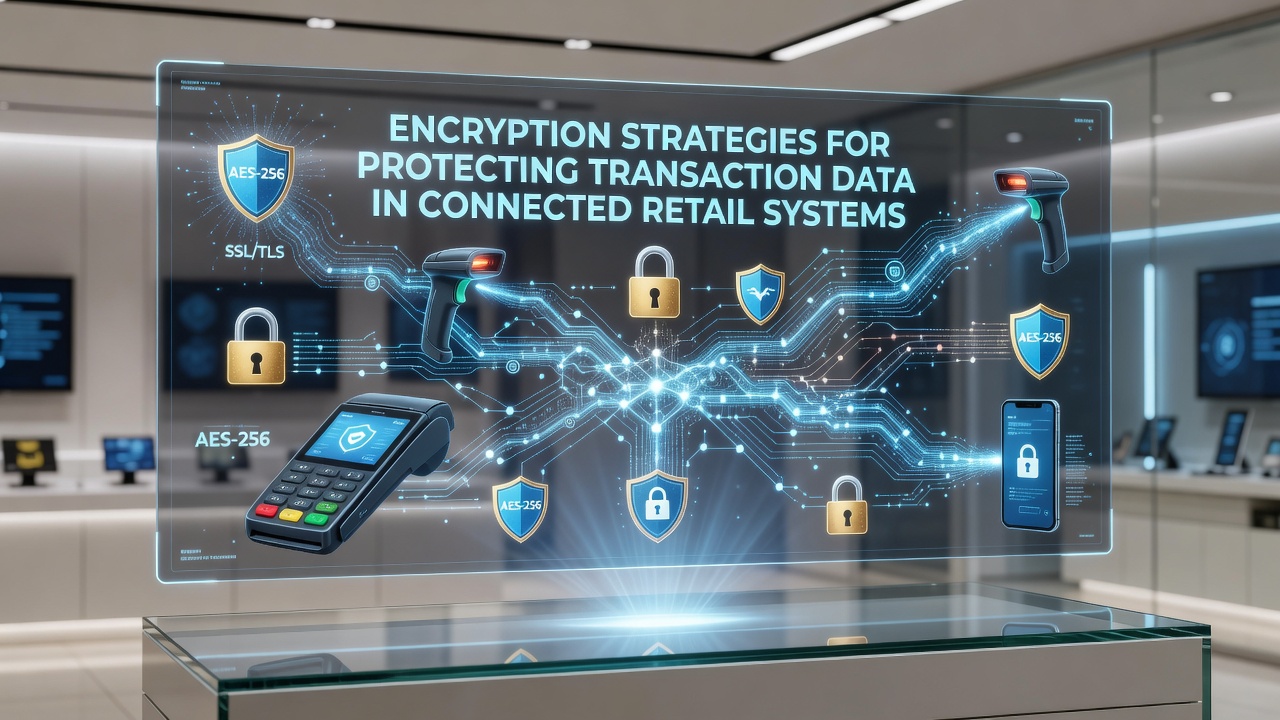
Retail environments now connect point-of-sale terminals, mobile apps, and online platforms into single networks that move payment information across multiple channels at once, and data protection relies on layered encryption techniques that secure information from the moment a card is swiped until it reaches the processor. Modern systems apply these methods consistently because transaction volumes continue to rise and networks expand to include inventory tools and customer loyalty databases. ## Core Encryption Protocols in Retail Networks
Connected retail setups use symmetric algorithms such as AES-256 for bulk data encryption inside databases while asymmetric methods like RSA handle key exchanges between devices and servers. Transport Layer Security version 1.3 encrypts data moving over public networks, and it replaces older protocols that left gaps during transmission. Point-to-point encryption solutions wrap card data at the terminal itself so that even internal staff cannot access readable information during transfer. Tokenization often works alongside these protocols by replacing sensitive numbers with unique identifiers that hold no value if intercepted, and researchers at several universities have documented how this combination reduces the scope of systems that fall under strict compliance audits. Hardware security modules store encryption keys in tamper-resistant environments, and they perform cryptographic operations without exposing the keys to application servers. ## Implementation Across Multi-Channel Retail Platforms
In practice, retail chains deploy these strategies by installing encryption firmware on terminals that automatically applies algorithms before data leaves the device. Cloud-based inventory systems receive only tokenized records, while the actual payment details travel through encrypted tunnels that terminate at payment processors. Observers note that this separation keeps customer details isolated from marketing databases and reduces the number of entry points that attackers might target. Wireless connections between handheld scanners and central servers require additional safeguards such as certificate pinning, and data shows that certificate-based authentication prevents man-in-the-middle attempts during peak sales periods. June 2026 figures from industry monitoring groups indicate continued growth in mobile transactions, which has prompted retailers to update their encryption libraries to maintain compatibility with newer device operating systems.
## Standards and Regulatory Frameworks Guiding Encryption Choices
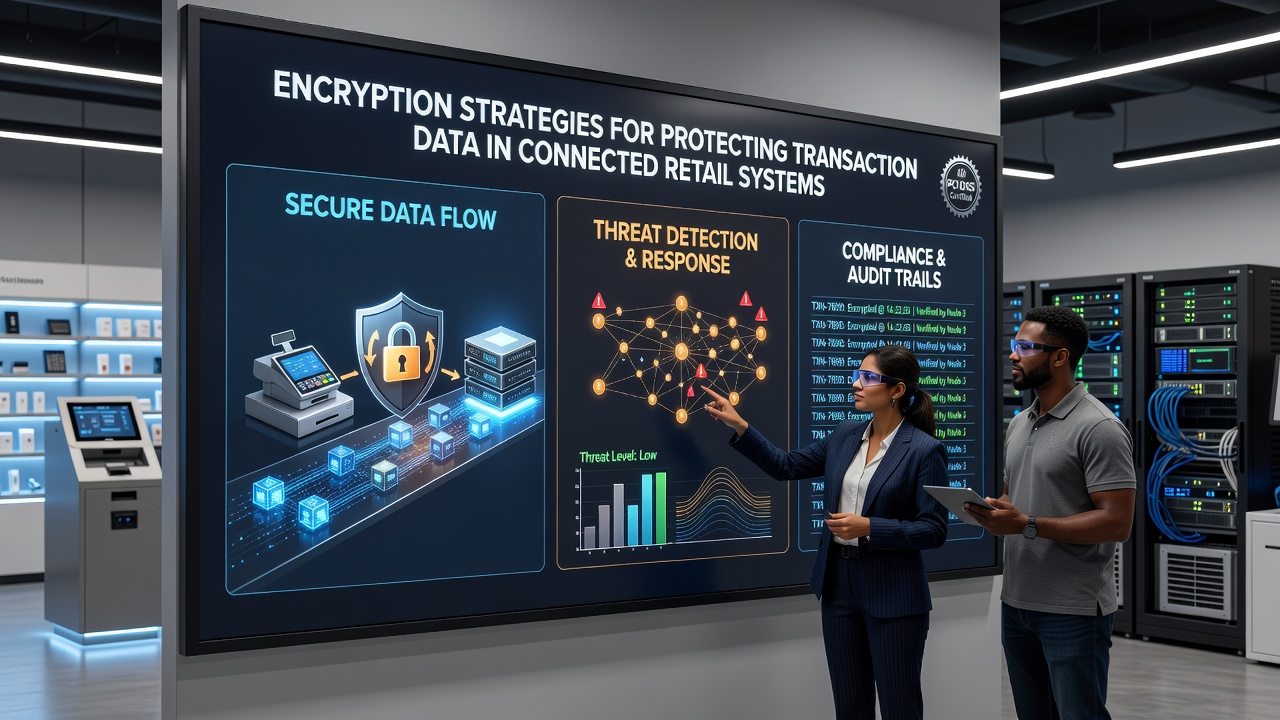
Payment Card Industry Data Security Standards specify minimum encryption strengths and key rotation schedules, while government agencies in different regions publish complementary guidelines. The National Institute of Standards and Technology in the United States maintains detailed recommendations on algorithm selection and key management that many retail operators reference when configuring systems. In the European Union, ENISA provides technical reports that address encryption in cross-border retail environments where data may travel between member states. Canadian and Australian authorities have issued their own frameworks that emphasize end-to-end protection for payment information moving through connected supply chains. These documents stress regular audits of encryption implementations and require organizations to document how keys are generated, distributed, and retired. Compliance teams often map these requirements onto existing network diagrams to verify that every segment of a transaction path meets the stated criteria. ## Key Management and Operational Practices
Effective strategies depend on disciplined key management because compromised keys can undermine even the strongest algorithms. Retail operators use automated rotation systems that replace keys on set schedules without interrupting sales operations, and they maintain separate key hierarchies for different transaction types. Logging mechanisms record every key access event so that security teams can review activity for anomalies. Training programs teach store personnel about the importance of not bypassing encryption controls during troubleshooting, while technical staff receive instruction on verifying cipher suite configurations after software updates. Case studies from large retail groups illustrate how centralized dashboards now track encryption status across hundreds of locations, allowing rapid identification of devices that fall out of policy. ## Future Directions for Retail Data Protection
Advances in quantum-resistant algorithms are entering testing phases for retail use, and several payment processors have begun pilot programs that layer post-quantum cryptography over existing TLS connections. These efforts aim to future-proof systems against potential advances in computing power that could threaten current public-key methods. Integration with blockchain-based ledgers for audit trails appears in some experimental setups, where encrypted transaction hashes provide immutable records without exposing the underlying payment details. Continued expansion of Internet of Things devices in stores introduces new encryption considerations because sensors and smart shelves may process limited payment-related data. Manufacturers now embed lightweight cryptographic modules that support the same AES standards used in primary terminals, maintaining consistency across the broader network. ## Conclusion
Encryption strategies in connected retail systems combine established protocols, rigorous key management, and alignment with international standards to protect transaction data throughout its lifecycle. As networks grow more complex, the same foundational techniques adapt through updated implementations and expanded device support. Retail operators that maintain current configurations and follow documented practices keep payment information shielded even as transaction patterns evolve.